RBA Research Conference 2026 | The Pursuit of an Integrated Financial System: Harnessing Payments to Drive Sector-Wide Impact and Inclusion
June 25th, 2026 • Kigali Serena Hotel

RBA RESEARCH
CONFERENCE 2026

The Pursuit of an Integrated Financial System:
Harnessing Payments to Drive Sector-Wide Impact and Inclusion

Thursday, June 25th, 2026
Kigali Serena Hotel, Ballroom

Panel Discussion

Industry leaders examine how payment systems shape financial sector structure, competition, and inclusion, and explore the role of interoperability, real-time payments, and digital public infrastructure in building a connected financial ecosystem.

5 Research Papers

Cutting-edge research on cross-border payment systems, interoperability, open finance & digital public infrastructure, and Data, Governance & Ecosystem Connectivity

Conference Themes

Exploring the intersection of payments, data, digital transformation, and inclusion in Rwanda's evolving financial sector

Digital Payments & System Interoperability

Building efficient, scalable, and interconnected digital payment systems that enable seamless, real-time transactions across platforms.

Payments, Innovation & Financial Sector Competitiveness

Leveraging innovation, partnerships, and secure technologies to enhance payment solutions and strengthen financial sector competitiveness.

Inclusion Through Payments

Using digital payments as a gateway to expand financial inclusion for underserved groups, including SMEs, women, youth, and rural communities.

Cross-Border Payments & Regional Integration

Advancing interoperable cross-border payment systems to facilitate trade, remittances, and regional economic integration.

Data, Governance & Ecosystem Connectivity

Harnessing payment data and strong governance frameworks to improve financial oversight, connectivity, and consumer protection.

Featured Speakers

Leading voices in banking, policy, and financial innovation

Hon. Soraya M. HAKUZIYAREMYE

Hon. Soraya M. HAKUZIYAREMYE

Governor, NBR

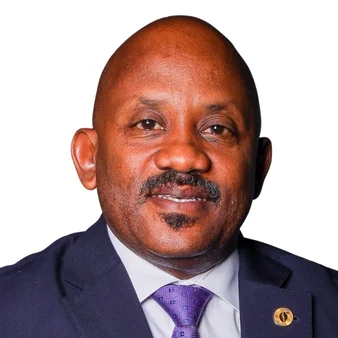
Tony Ntore

Tony Francis Ntore

CEO, RBA

Hannington Namara

Hannington Namara

MD, Equity Bank

Patience Mutesi

Patience Mutesi

MD, BPR Bank

Blaise Pascal Gasabira

Blaise Pascal Gasabira

CEO, RSwitch

Jean Bosco Sebabi

Deputy CEO, PAPSS

Victor Vusumuzi

VP & Head of Business Development East Africa, Mastercard

Meet our Partners

Conference Schedule

A full day of insights, discussions, and networking

08:00 - 09:00

Arrival and Registration

09:00 - 09:40

Opening Session

Welcome Address, Introduction, Opening Remarks, and Keynote Address

09:40 - 10:10

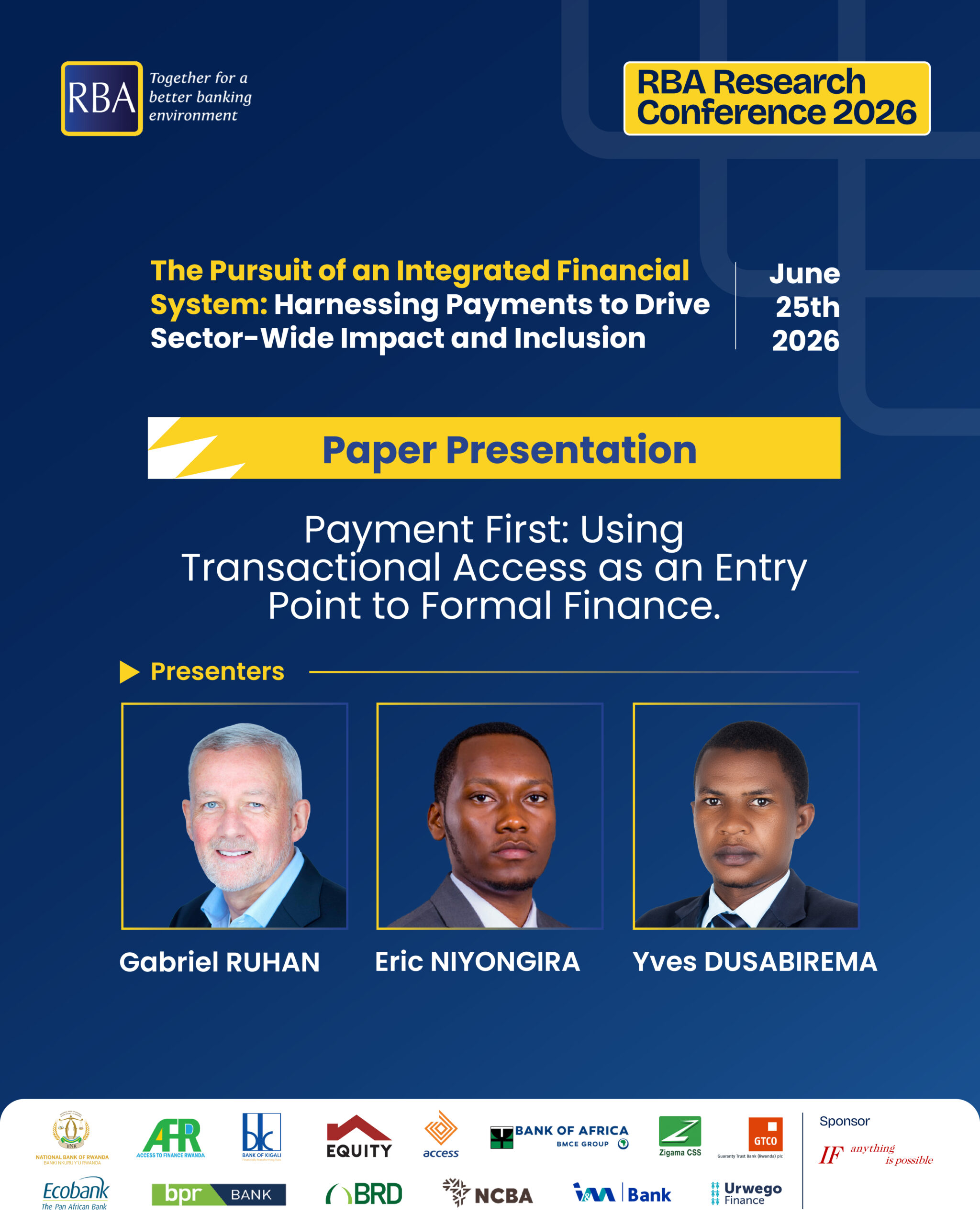
Paper Presentation

Payment First: Using Transactional Access as an Entry Point to Formal Finance

10:10 - 11:10

Panel Discussion

Industry leaders on Payments, Interoperability and Inclusion

11:30 - 01:30

Research Paper Presentations

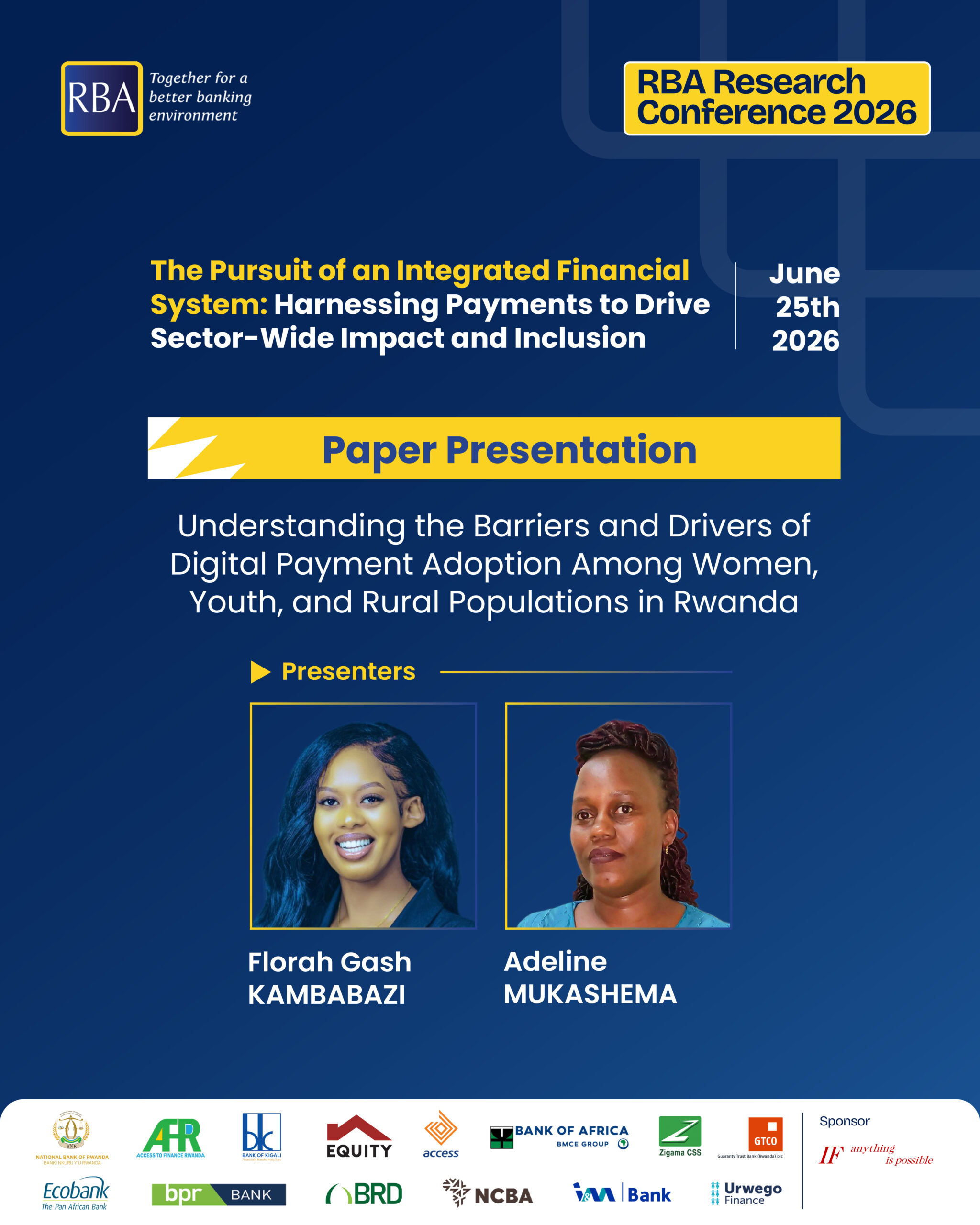
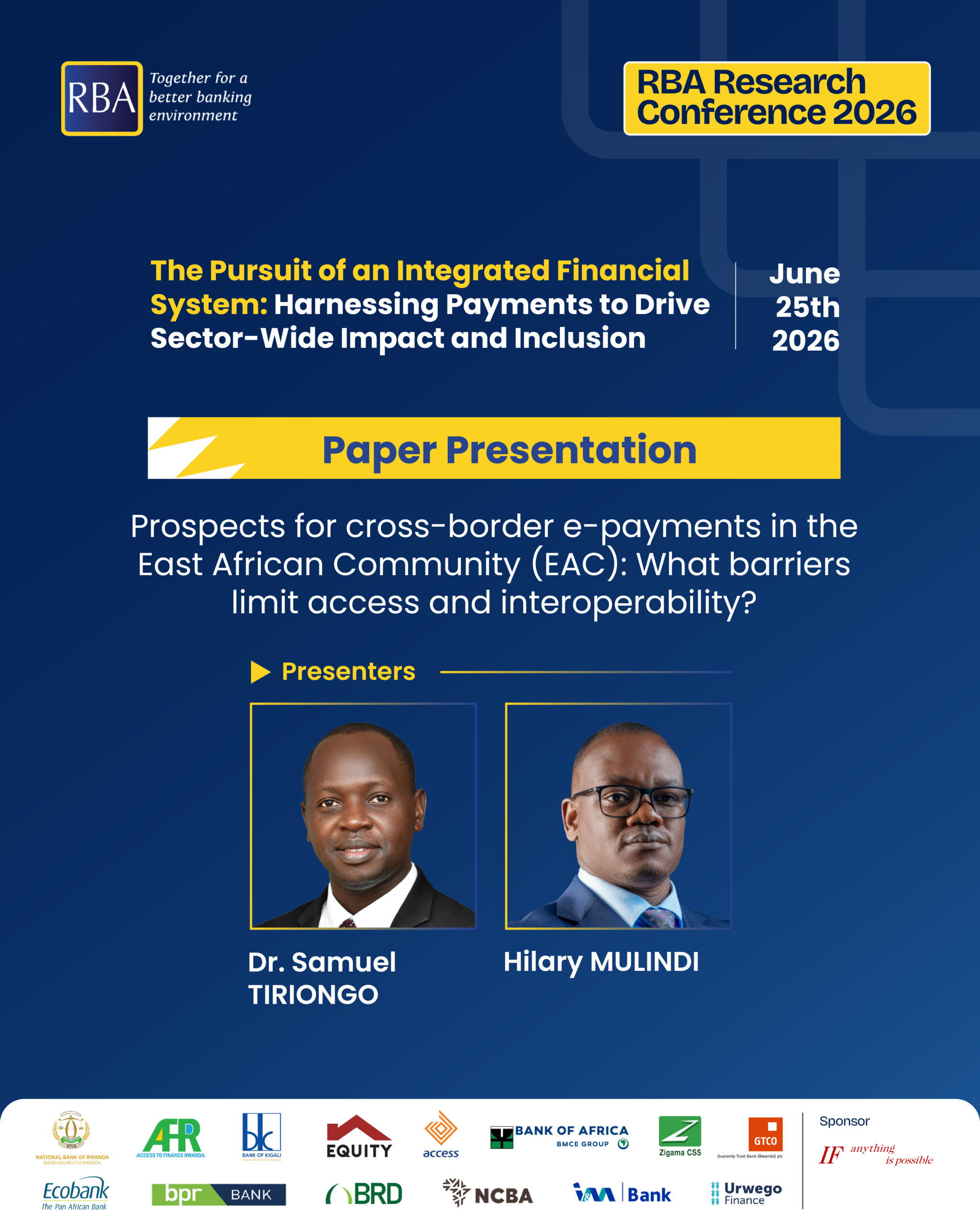
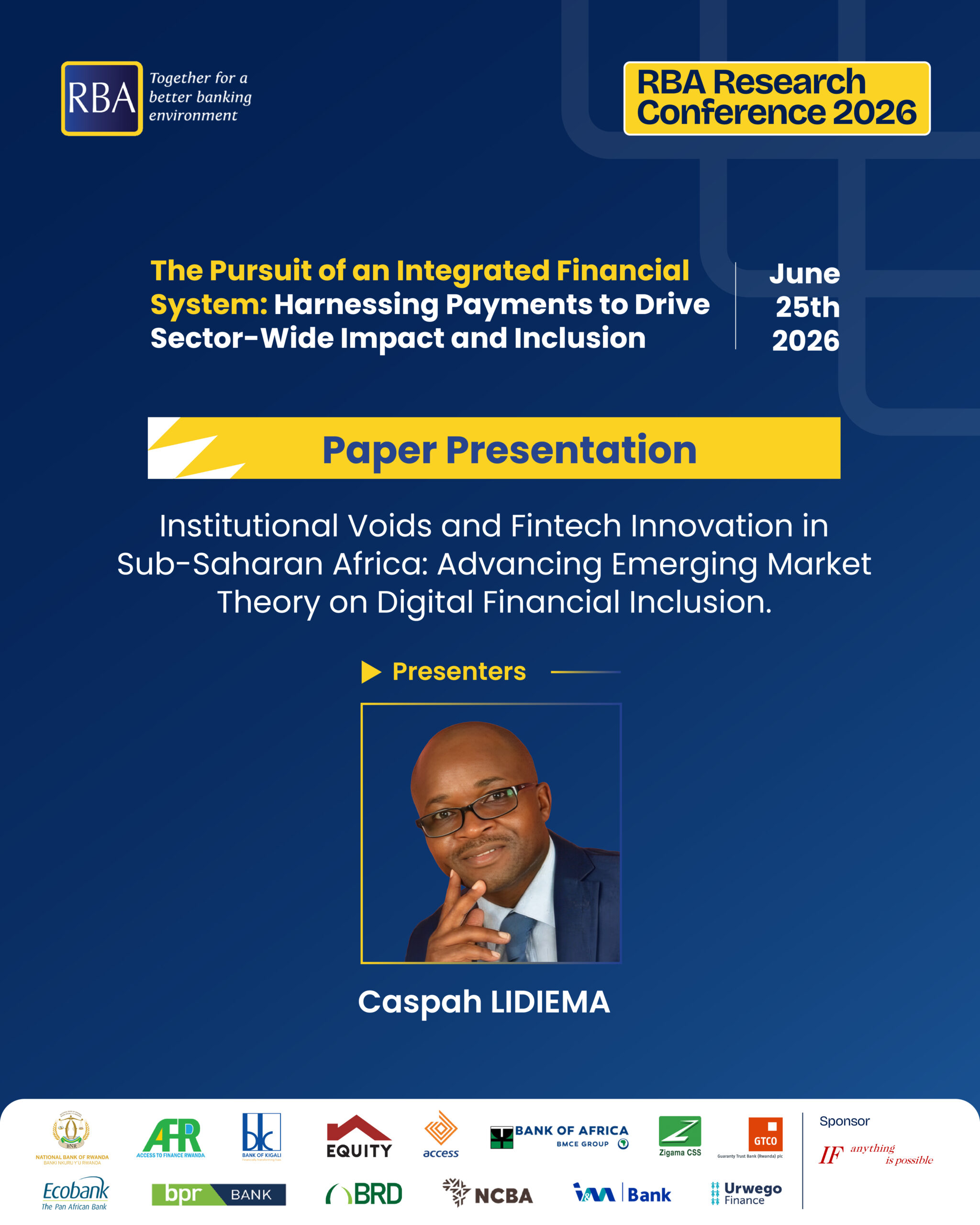
Prospects for cross-border e-payments in the East African Community (EAC) || Understanding the Barriers and Drivers of Digital Payment Adoption Among Women, Youth, and Rural Populations in Rwanda || Institutional Voids and Fintech Innovation in Sub-Saharan Africa || Beyond Transactions: Interoperability, Trust Infrastructure, and Customer-Centered Design as Foundations for an Integrated Financial and Public Service Ecosystem

01:30 - 01:40

Closing Remarks

02:00 - 03:00

Lunch & Networking

Join Us at RBA Research Conference 2026

Be part of the conversation shaping Rwanda's financial future. Register now to secure your spot at this premier banking research event.

FINANCIAL INSTITUTION ANALYSIS THROUGH BANK SIMULATION (B@NKSIM)

PROPOSED DURATION: • 5 DAYS

Learning objectives:

By the end of this module, participants will be able to:

  • Describe the main methods used by external observers to analyse financial institutions.
  • Explain the major decisions currently taken in the banking sector and their implications.
  • Analyse how different areas of the banking business interact to influence overall business and financial performance.
  • Interpret the overall strategy of their financial institution and its key drivers.
  • Apply knowledge from the simulation game to connect and synthesise the topics covered during the four previous modules.

DIGITAL TRANSFORMATION AND FINTECH

PROPOSED DURATION: • 4 DAYS

Learning objectives:

By the end of this module, participants will be able to:

  • Assess the main transformation drivers impacting their institution and translate them into clear priorities.
  • Map a priority customer journey and identify concrete opportunities to improve customer experience and operational efficiency.
  • Compare key digital banking business models (platforms, partnerships, BaaS, embedded finance) and select relevant options for their context.
  • Select and justify high-value digital/AI/data/cloud use cases, including value, feasibility, and key risks.
  • Define a pragmatic transformation roadmap (quick wins + mid-term initiatives) with governance, KPIs and change/adoption actions.
  • Present a concise “transformation blueprint” to stakeholders (structure, rationale, and expected outcomes).

LEADERSHIP AND PEOPLE MANAGEMENT: Leading as a Manager Coach

PROPOSED DURATION: • 4 DAYS

Learning objectives:

By the end of this module, participants will be able to:

  • Reflect on their personal leadership style and managerial role.
  • Adopt a coaching mindset to empower and develop their team members.
  • Manage performance effectively while maintaining motivation and engagement.
  • Identify and develop future talents within their organization.
  • Balance team care with self-care for sustainable leadership.

SUSTAINABLE FINANCE AND ESG

PROPOSED DURATION: • 2 DAYS

Learning objectives:

By the end of this module, participants will be able to:

  • Map ESG priorities to their bank’s strategic objectives and identify 2–3 concrete areas for integration (e.g., lending policies, product design, client segmentation). 
  • Design governance arrangements by defining clear roles, responsibilities, and decision-making processes for ESG within their organization. 
  • Embed ESG factors into existing risk management frameworks, including credit, market, and operational risk assessment practices. 
  • Interpret and apply relevant ESG regulations and reporting standards to their bank’s context, identifying immediate compliance gaps and actions. 
  • Develop a practical, step-by-step action plan to implement ESG initiatives in their own bank, including quick wins and longer-term priorities.

STRATEGY, GOVERNANCE, & INTERNAL CONTROL

PROPOSED DURATION: • 5 DAYS

Learning objectives:

By the end of this module, participants will be able to:

  • Define and monitor long-term strategies in alignment with the Mission, Values, and Risk Appetite set by the Board of Directors.
  • Translate the fundamental principles of corporate governance into robust and effective organisational practices.
  • Apply the Fit and Proper requirements at both Non-Executive and Executive levels.
  • Identify and explain the expected contributions of Commercial, Support, and Control functions within a sound risk management framework.
  • Describe the positioning, purpose, and functioning of the Risk Management, Compliance, and Internal Audit functions.
  • Distinguish between the main financial and non-financial risk categories to which a financial institution is exposed and outline the associated risk management tactics and mitigating measures.
  • Explain the risk management cycle and analyse the interrelationships across risk categories, including the cause-and-effect domino dynamics between them.