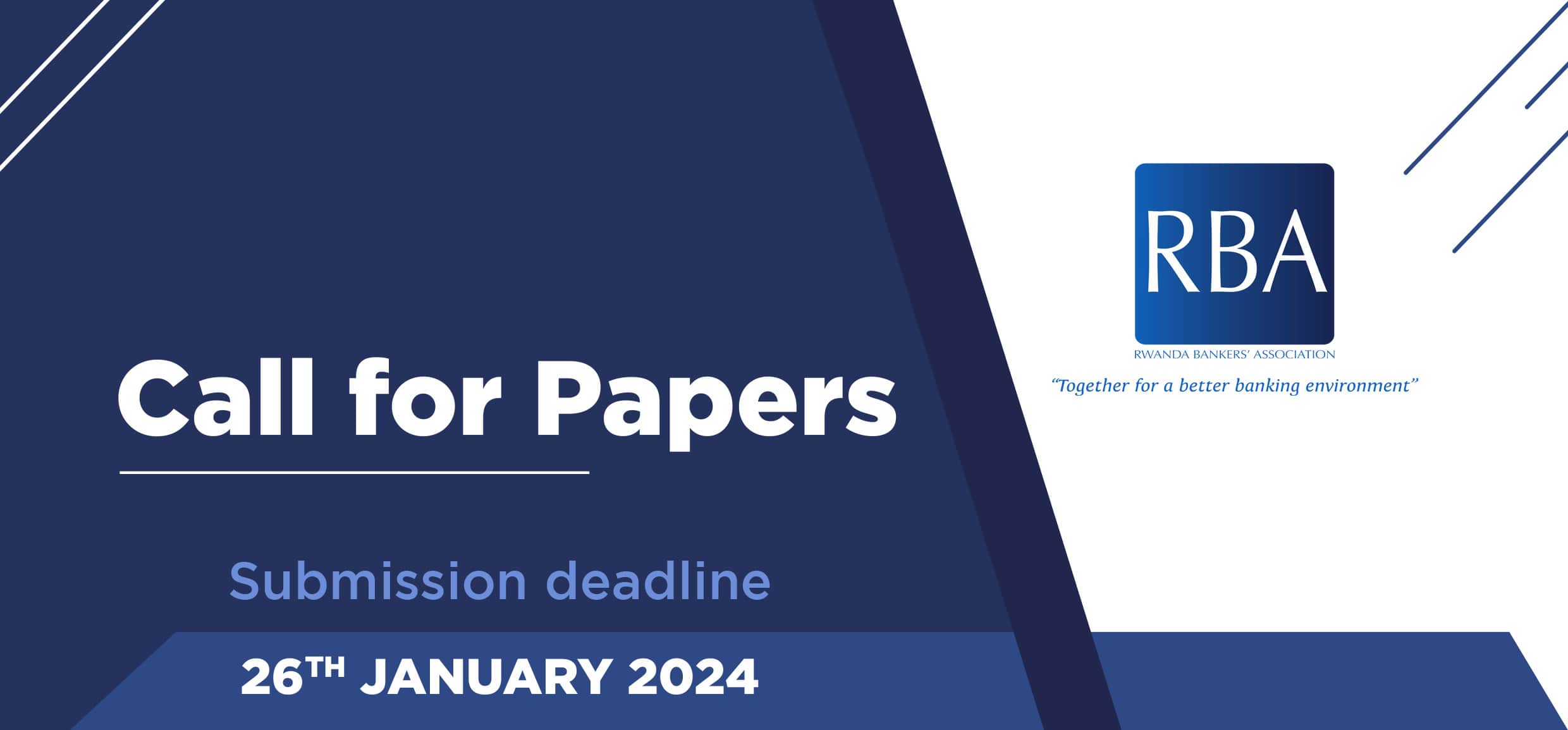
The Rwanda Bankers’ Association is thrilled to invite researchers, scholars, and industry experts to contribute to its inaugural Annual Research Conference scheduled for May 9th, 2024. Under the theme “The […]...
Rwanda Bankers’ Association (RBA) was formally established in 2009, to serve as an advocate for the banking sector in Rwanda. Its membership consists of all banks duly licensed by the […]...
The banking sector in Rwanda registered Rwf96.9 billion in the first half of 2023, an increase from Rwf74.7 billion in 2022, according to the National Bank of Rwanda (NBR). In […]...
L’association rwandaise des banques (RBA) organise une compétition sportive multidisciplinaire pour 9 institutions bancaires. La culture du sport, la bonne santé et la collaboration sont les principaux objectifs de cet […]...
Ishyirahamwe ry’amabanki mu Rwanda (RBA) ryateguye irushanwa rihuza amabanki mu Rwanda.Iri rushanwa rikaba rigiye kuba ku nshuro yaryo ya kane 4. Umwaka ushyize iri rushanwa ryatwawe na EQUITY BANK muri […]...
The Board of Directors of I&M Bank Rwanda Plc, on Wednesday, June 14, announced the appointment of Benjamin Mutimura as the new Chief Executive Officer (CEO), effective 1st July 2023. […]...
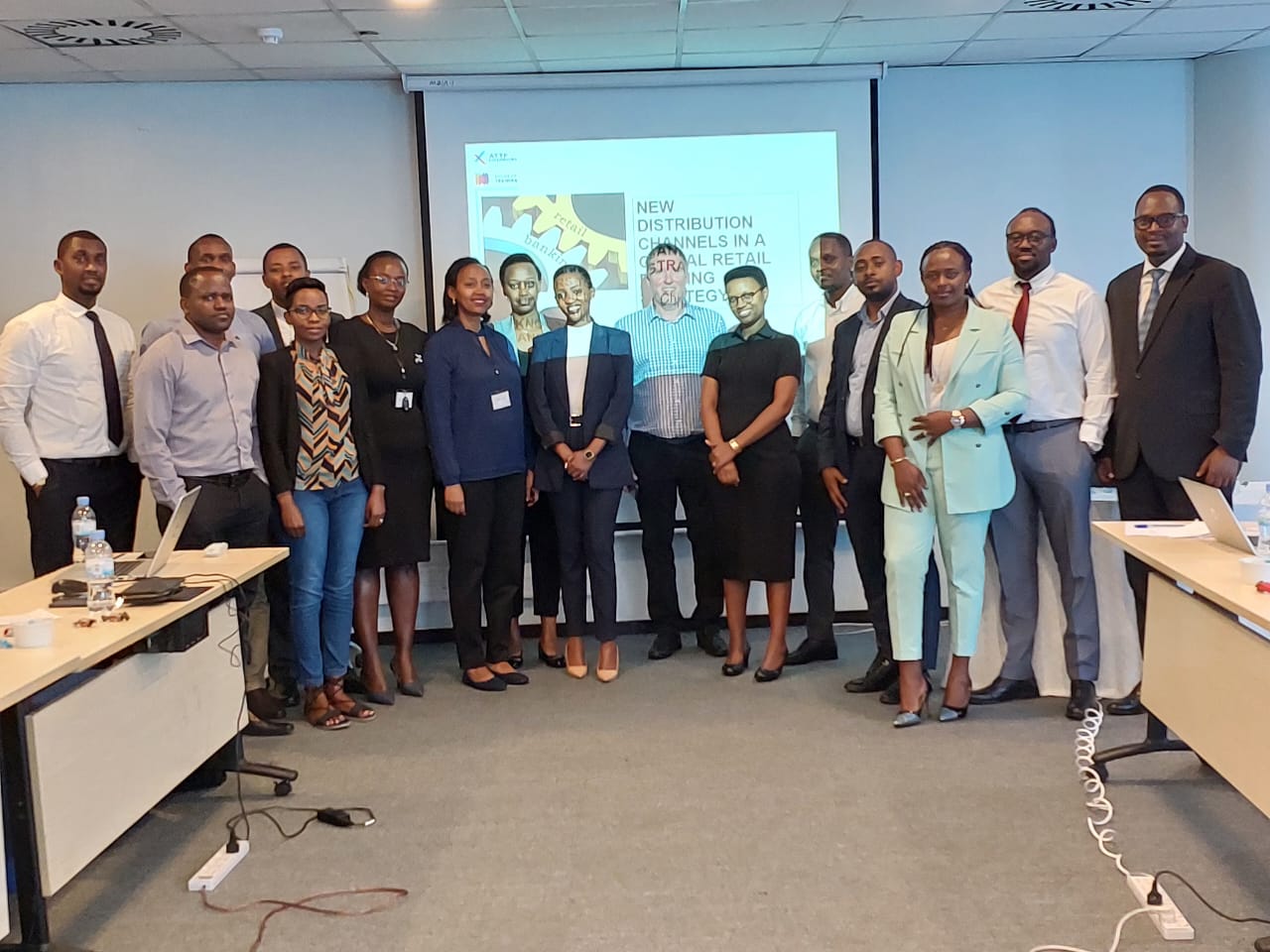
In a bid to build capacities among banking sector professionals in Rwanda, Rwanda Bankers’ Association (RBA) in partnership with ATTF Luxembourg this week concluded a three-day training between 27th and […]...
The National Bank of Rwanda has increased its lending rate by 50 basis points from 6.5 percent to 7 percent in efforts to tame the persistently high prices. This decision was announced […]...
FINANCIAL INSTITUTION ANALYSIS THROUGH BANK SIMULATION (B@NKSIM)
PROPOSED DURATION: • 5 DAYS
Learning objectives:
By the end of this module, participants will be able to:
Describe the main methods used by external observers to analyse financial institutions.
Explain the major decisions currently taken in the banking sector and their implications.
Analyse how different areas of the banking business interact to influence overall business and financial performance.
Interpret the overall strategy of their financial institution and its key drivers.
Apply knowledge from the simulation game to connect and synthesise the topics covered during the four previous modules.
DIGITAL TRANSFORMATION AND FINTECH
PROPOSED DURATION: • 4 DAYS
Learning objectives:
By the end of this module, participants will be able to:
Assess the main transformation drivers impacting their institution and translate them into clear priorities.
Map a priority customer journey and identify concrete opportunities to improve customer experience and operational efficiency.
Compare key digital banking business models (platforms, partnerships, BaaS, embedded finance) and select relevant options for their context.
Select and justify high-value digital/AI/data/cloud use cases, including value, feasibility, and key risks.
Define a pragmatic transformation roadmap (quick wins + mid-term initiatives) with governance, KPIs and change/adoption actions.
Present a concise “transformation blueprint” to stakeholders (structure, rationale, and expected outcomes).
LEADERSHIP AND PEOPLE MANAGEMENT: Leading as a Manager Coach
PROPOSED DURATION: • 4 DAYS
Learning objectives:
By the end of this module, participants will be able to:
Reflect on their personal leadership style and managerial role.
Adopt a coaching mindset to empower and develop their team members.
Manage performance effectively while maintaining motivation and engagement.
Identify and develop future talents within their organization.
Balance team care with self-care for sustainable leadership.
SUSTAINABLE FINANCE AND ESG
PROPOSED DURATION: • 2 DAYS
Learning objectives:
By the end of this module, participants will be able to:
Map ESG priorities to their bank’s strategic objectives and identify 2–3 concrete areas for integration (e.g., lending policies, product design, client segmentation).
Design governance arrangements by defining clear roles, responsibilities, and decision-making processes for ESG within their organization.
Embed ESG factors into existing risk management frameworks, including credit, market, and operational risk assessment practices.
Interpret and apply relevant ESG regulations and reporting standards to their bank’s context, identifying immediate compliance gaps and actions.
Develop a practical, step-by-step action plan to implement ESG initiatives in their own bank, including quick wins and longer-term priorities.
STRATEGY, GOVERNANCE, & INTERNAL CONTROL
PROPOSED DURATION: • 5 DAYS
Learning objectives:
By the end of this module, participants will be able to:
Define and monitor long-term strategies in alignment with the Mission, Values, and Risk Appetite set by the Board of Directors.
Translate the fundamental principles of corporate governance into robust and effective organisational practices.
Apply the Fit and Proper requirements at both Non-Executive and Executive levels.
Identify and explain the expected contributions of Commercial, Support, and Control functions within a sound risk management framework.
Describe the positioning, purpose, and functioning of the Risk Management, Compliance, and Internal Audit functions.
Distinguish between the main financial and non-financial risk categories to which a financial institution is exposed and outline the associated risk management tactics and mitigating measures.
Explain the risk management cycle and analyse the interrelationships across risk categories, including the cause-and-effect domino dynamics between them.